
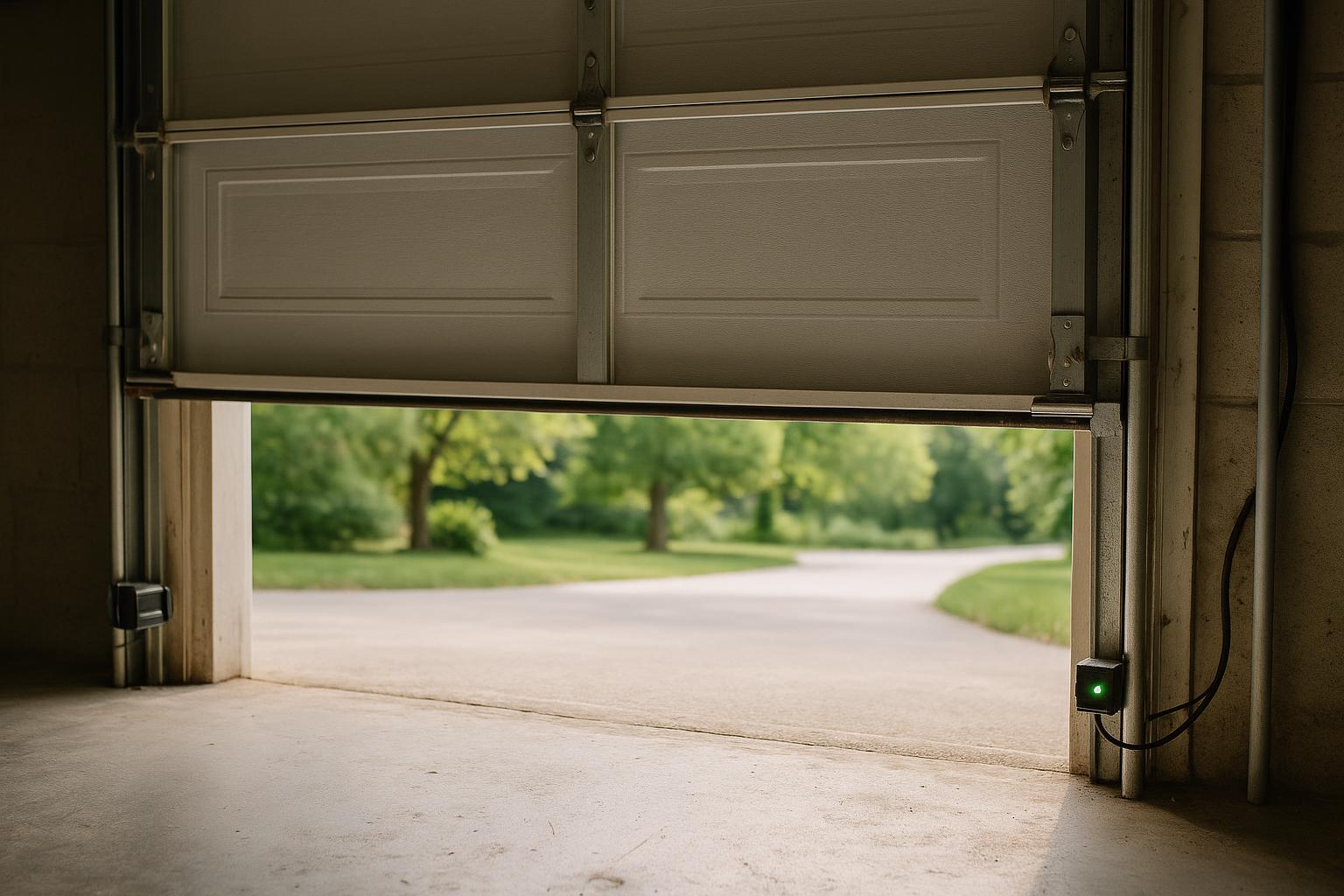
That Frustrating Moment When Your Garage Door Won't Stay Closed
You press the button on your remote, watch your garage door glide downward, and then — just before it touches the floor — it stops and reverses right back up. You try again. Same thing. Maybe you try holding the wall button, and it works, but the remote won't cooperate. Or maybe it reverses no matter what you do.
This is one of the most common garage door problems we hear about from homeowners in Los Gatos, and it's more than just an annoyance. A garage door that won't fully close is a security risk, an energy waste, and an open invitation for pests — especially for homes nestled near the wooded hillsides of the Santa Cruz Mountains where critters are always looking for shelter.
The good news is that this problem almost always has a logical, fixable cause. Let's walk through the most common reasons your garage door reverses before reaching the floor and what you can do about each one.
1. Misaligned or Dirty Safety Sensors
This is the number one cause of a garage door that reverses before closing, and it's often the easiest to fix yourself.
Every garage door opener manufactured after 1993 is required to have photo-eye safety sensors mounted near the bottom of the door tracks, about six inches off the ground. These sensors send an invisible infrared beam across the opening. If anything breaks that beam — a child, a pet, a bicycle, a leaf — the door reverses to prevent injury or damage.
Here's what can go wrong with these sensors:
- They get bumped out of alignment. A stray kick, a bike tire, or even vibration over time can shift one sensor so the beam no longer connects with the other. When the beam is broken, the opener thinks something is in the way.
- They get dirty. Dust, cobwebs, and moisture can cloud the sensor lenses. This is especially common in Los Gatos garages during the dry, dusty summer months or after winter rains.
- Sunlight interferes with the beam. If your garage faces west or south, direct afternoon sunlight can overwhelm the infrared sensor and trick it into thinking the beam is broken.
To troubleshoot, check whether the small LED lights on both sensors are lit and steady. A blinking light usually indicates misalignment. Try wiping the lenses with a soft cloth and gently adjusting the sensors until both lights are solid. If sunlight is the issue, a small shade or cardboard tube around the affected sensor can help.
2. The Close-Limit Switch Needs Adjustment
Your garage door opener has settings called limit switches that tell it how far the door should travel when opening and closing. If the close-limit is set incorrectly — telling the door to travel farther than it physically can — the opener interprets the resistance as an obstruction and reverses.
This often happens after a new opener installation, a spring replacement, or sometimes just from settings drifting over years of use. Most openers have adjustment screws or a digital setting for the down limit. Your owner's manual will show you where these controls are located.
If you're not comfortable making this adjustment yourself, it's a quick fix for a professional technician. At Los Gatos Garage Door Co, limit switch adjustments are one of the most common service calls we handle, and it usually takes just a few minutes on-site.
3. Worn or Broken Garage Door Springs
Your garage door springs do the heavy lifting — literally. They counterbalance the weight of the door so the opener only has to provide a small amount of force to move it. When springs wear out, lose tension, or break, the door becomes much heavier than the opener expects.
As the door descends, the opener struggles against the extra weight. The built-in force sensor detects excessive resistance and reverses the door as a safety precaution. You might also notice the door moving more slowly than usual, sounding strained, or stopping partway.
Important safety note: Garage door springs are under extreme tension and can cause serious injury if handled improperly. Spring replacement is not a DIY job. If you suspect your springs are the issue, call a professional. We offer same-day spring replacement service throughout Los Gatos, Saratoga, Campbell, and the surrounding areas.
4. Track Obstructions or Damage
Take a close look at the metal tracks on either side of your garage door. Even a small dent, a buildup of debris, or a section that's come loose from the wall can create enough friction to trigger the opener's auto-reverse feature.
Run your hand carefully along the inside of the tracks (with the door open and the opener disconnected) and feel for any irregularities. Remove any visible debris. If you find a dent or a section of track that's pulled away from the wall, that's a repair best left to a technician who can realign or replace the damaged section safely.
5. Worn Rollers or Hinges
Over time, the rollers that guide your garage door along the tracks can wear out, crack, or seize up. When rollers don't spin freely, they create resistance that the opener may interpret as an obstruction. You'll often hear grinding, squealing, or popping sounds if this is the problem.
Nylon rollers typically last longer and run more quietly than steel rollers, and they're a popular upgrade for homeowners in quieter Los Gatos neighborhoods where garage noise can be noticeable. Replacing worn rollers is a straightforward maintenance task that can dramatically improve how your door operates.
6. Opener Force Settings Are Too Low
Every garage door opener has adjustable force settings that control how much power it uses to open and close the door. If the closing force is set too low, the opener may not have enough power to push the door all the way down, especially if the door has some natural resistance from weather seals, slight track friction, or temperature changes.
Most openers have a force adjustment screw or dial. Increasing the down force slightly — in small increments — can solve the problem. But be careful: setting the force too high can override the safety reverse feature, which exists to protect people and pets. If you're unsure about the right balance, a professional can calibrate it properly.
When to Call a Professional
Some of these fixes are simple enough for a handy homeowner to tackle on a Saturday morning. Cleaning sensors, checking for track debris, and minor force adjustments are all reasonable DIY tasks. But there are clear signs you should call in a pro:
- The door is visibly sagging, crooked, or off-track
- You hear loud banging, snapping, or grinding noises
- Springs appear stretched, rusted, or broken
- The problem persists after you've tried basic troubleshooting
- You're not sure what's causing the issue
A garage door that won't close properly isn't just inconvenient — it compromises your home's security and can lead to bigger, more expensive problems if ignored.
Get It Fixed Right the First Time
At Los Gatos Garage Door Co, we diagnose and repair reversing garage doors every week. Whether it's a simple sensor realignment or a full spring replacement, our local technicians arrive on time, explain what's happening in plain language, and get your door working reliably again. We serve homeowners throughout Los Gatos, Monte Sereno, Scotts Valley, Campbell, and the surrounding communities.
If your garage door keeps reversing and you can't figure out why, give us a call. We'll get to the bottom of it — and get your door all the way to the bottom, too.