
Your Garage Door Shouldn't Sound Like That
You press the button, and instead of the smooth hum you're used to, your garage door groans, squeals, or rattles its way up the track. If you're a homeowner in Los Gatos, you probably use your garage door multiple times a day — it's one of the most frequently operated moving parts in your entire home. So when it starts making unusual noises, it's not something you should ignore.
A noisy garage door isn't just annoying. It's often an early warning sign that something is wearing out, misaligned, or about to fail. The good news? Most garage door noises have identifiable causes, and catching them early can save you from a costly emergency repair down the road.
Let's break down the most common garage door noises, what they mean, and what you should do about each one.
Grinding or Scraping Sounds
A grinding noise when your garage door opens or closes usually points to one of two problems: the rollers are worn out, or the door is rubbing against the track.
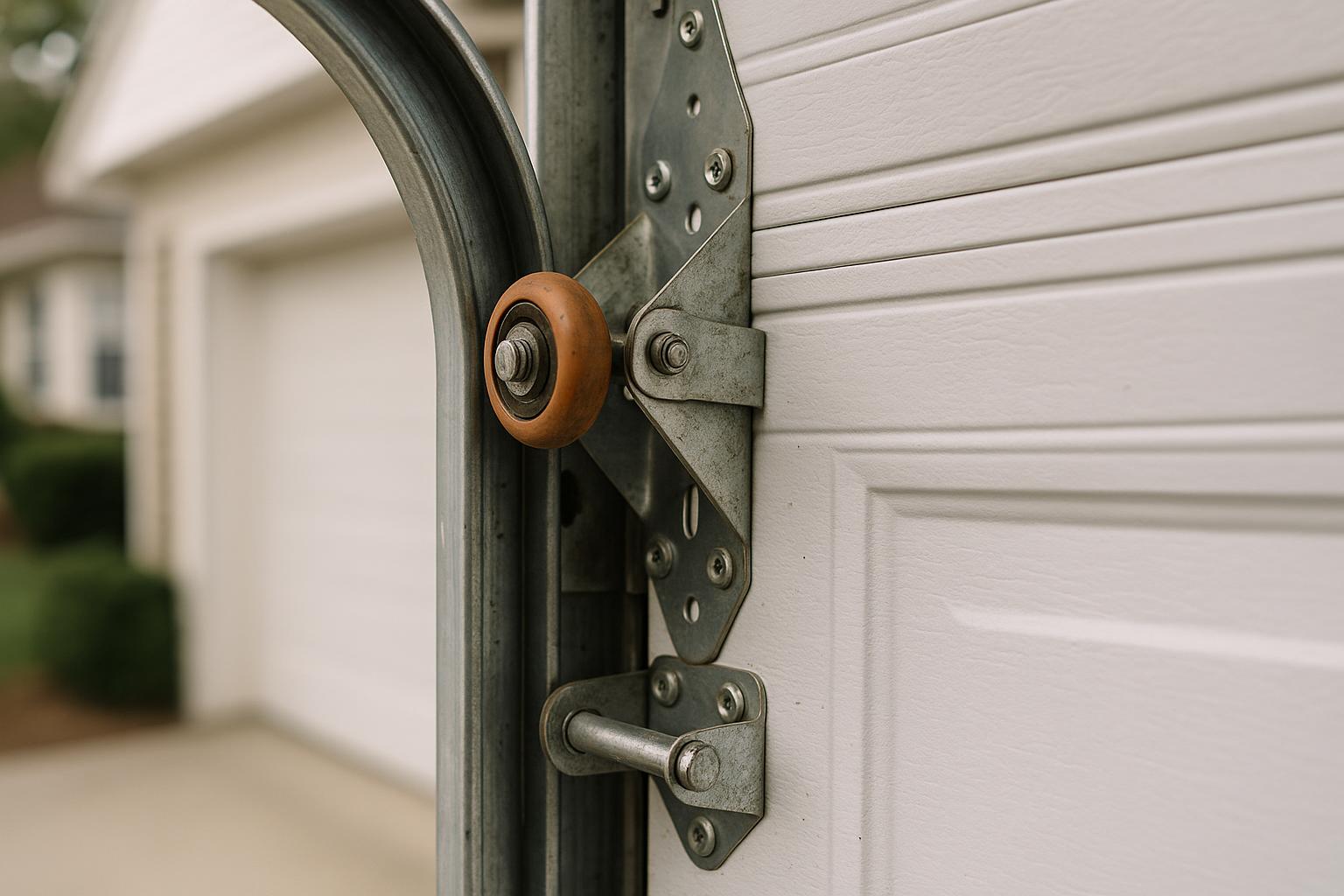
Worn rollers are one of the most common culprits. Most standard garage doors use steel or nylon rollers that ride along the vertical tracks. Over time, these rollers wear down, develop flat spots, or lose their lubrication. When metal grinds against metal without proper lubrication, you get that harsh scraping sound.
Track misalignment is the other likely cause. If the tracks have shifted — even slightly — the door panels can drag against the metal frame as they move. This not only creates noise but also puts extra stress on your opener and hardware.
What to Do
- Inspect your rollers for visible wear, cracks, or flat spots. Nylon rollers tend to be quieter and last longer than steel ones.
- Check that the tracks are properly aligned and securely fastened to the wall brackets.
- If the grinding is severe or you notice the door struggling to move, call a professional before the problem worsens.
Squealing or Squeaking Sounds
High-pitched squealing is almost always a lubrication issue. Your garage door system has numerous moving parts — hinges, rollers, bearings, and the torsion spring system — and all of them need periodic lubrication to operate smoothly.
Here in the Los Gatos area, temperature swings between warm valley days and cooler mountain evenings can cause metal components to expand and contract, which accelerates the drying out of lubricant. If you live closer to the Santa Cruz Mountains — in areas like Scotts Valley or Boulder Creek — moisture and cooler temperatures can also contribute to rust buildup on metal parts.
What to Do
- Apply a silicone-based or lithium-based garage door lubricant to the rollers, hinges, springs, and bearing plates. Avoid using WD-40 as a long-term lubricant — it's a solvent that can actually strip away grease over time.
- Lubricate your garage door hardware every six months as part of a basic maintenance routine.
- If squealing persists after lubrication, the bearings in your rollers or spring system may need replacement.
Rattling or Vibrating Sounds
A rattling garage door often means something is loose. Over years of daily use, the nuts, bolts, and screws that hold your garage door system together can gradually vibrate free. This is completely normal wear and tear, but it shouldn't be left unaddressed.
Common sources of rattling include loose track brackets, worn hinges, a vibrating garage door opener, or even loose chain tension on a chain-drive opener.
What to Do
- Using a socket wrench, carefully tighten all the bolts on your tracks, hinges, and mounting brackets. Be careful not to overtighten, as this can strip the hardware or warp the tracks.
- If you have a chain-drive opener, check the chain tension. A sagging chain will slap and rattle during operation.
- Consider adding vibration isolators to your opener mounting bracket to reduce noise transfer into your ceiling and living spaces.
Banging or Popping Sounds
A loud bang or pop during operation is more concerning and usually signals a problem with the torsion springs or panels. Torsion springs are under enormous tension, and as they age, they can develop weak points that cause them to shift or pop during the winding and unwinding cycle.
Panel issues can also create banging sounds, especially if a panel is warped, cracked, or has come loose from its hinges. In older homes throughout Los Gatos and Monte Sereno, original garage doors that have been in service for decades are especially prone to panel deterioration.
What to Do
- Do not attempt to adjust or repair torsion springs yourself. These components are under extreme tension and can cause serious injury if handled improperly.
- If you hear a sudden loud bang followed by the door not working, a spring has likely broken. This requires professional repair.
- Inspect your panels visually for cracks, warping, or separation from the hinges.
Humming or Buzzing Without Movement
If your garage door opener hums or buzzes but the door doesn't move, the motor is engaging but the door isn't responding. This can be caused by a stripped gear inside the opener, a disconnected drive mechanism, or the door being locked or obstructed.
What to Do
- Check that the manual lock on your garage door isn't engaged.
- Make sure the emergency release cord hasn't been pulled, disconnecting the opener from the door.
- If neither of those is the issue, the opener's internal gears may be stripped and will need professional repair or replacement.
When Noise Means It's Time for Maintenance
Many garage door noises can be resolved with basic maintenance — lubrication, tightening hardware, and replacing worn rollers. In fact, scheduling a professional maintenance visit once a year is one of the best things you can do to extend the life of your garage door and keep it running quietly.
During a maintenance visit, a technician will inspect and lubricate all moving parts, test the balance of your door, check the opener's safety features, and identify small problems before they become big ones. For homeowners in Los Gatos, Saratoga, Campbell, and the surrounding communities, routine maintenance is especially important because your garage door is likely one of the most visible features of your home's curb appeal.
When to Call a Professional
While some noise troubleshooting is safe to do on your own, there are situations where you should always call a trained garage door technician:
- Any issue involving torsion springs or cables
- Grinding or scraping that doesn't improve after lubrication
- The door is visibly off-track or crooked
- Your opener motor runs but the door won't move
- You hear a sudden loud bang and the door stops working
At Los Gatos Garage Door Co, we've helped homeowners across Los Gatos and the surrounding area diagnose and fix every kind of garage door noise imaginable. If your door is telling you something, don't wait until it stops working entirely. Give us a call, and we'll get it running smoothly and quietly again.