
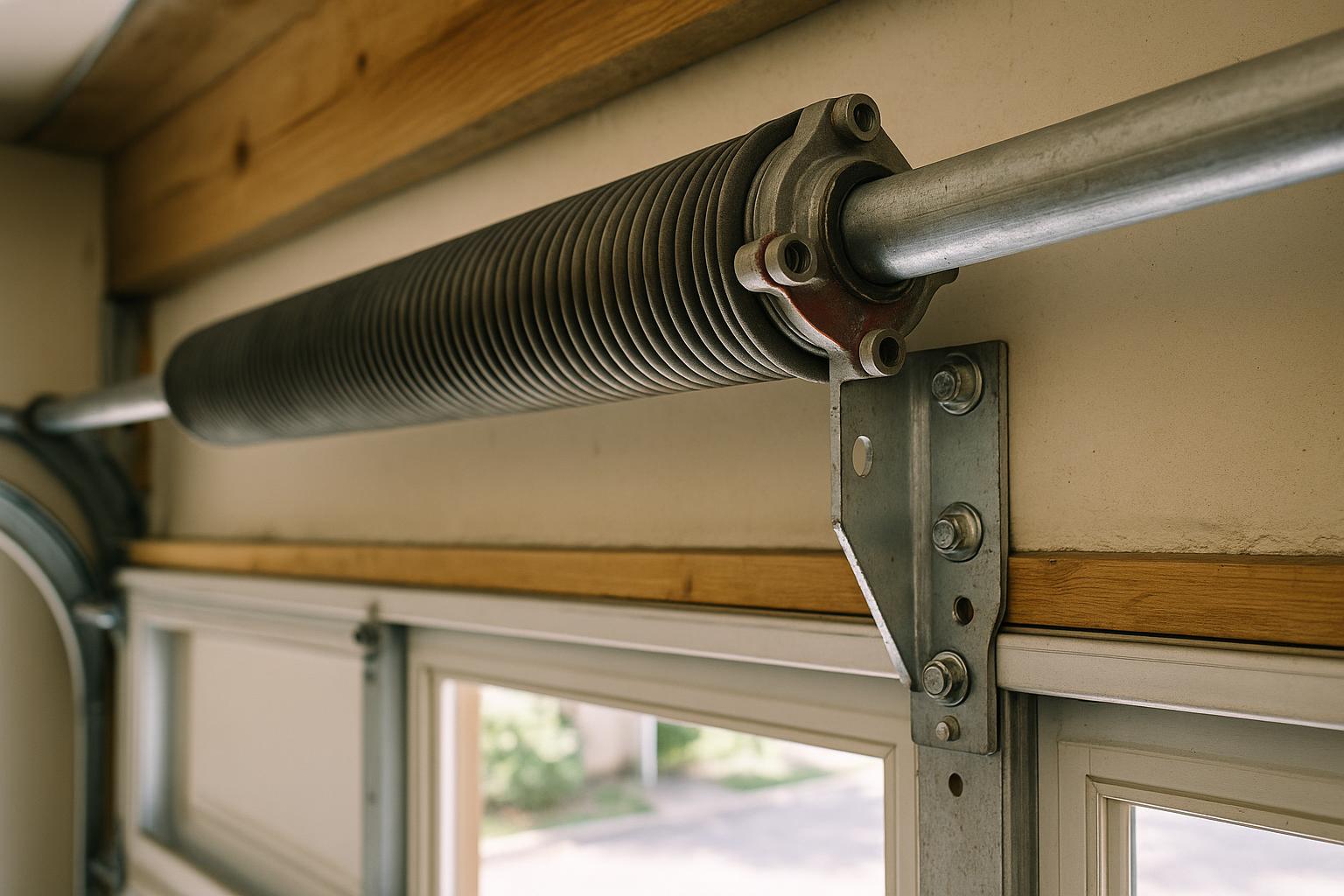
Your Garage Door Springs Are Doing More Work Than You Think
Most homeowners in Los Gatos don't think much about their garage door springs — until something goes wrong. But those tightly wound coils above your door are arguably the hardest-working component in your entire garage door system. They bear the full weight of the door every time it opens and closes, which for most households means a thousand or more cycles per year.
Garage door springs have a finite lifespan. When they start to fail, your door can become difficult to open, dangerously heavy, or completely inoperable. Knowing the warning signs of worn-out springs can help you get ahead of the problem before it turns into an emergency — or a safety hazard.
What Do Garage Door Springs Actually Do?
Your garage door likely weighs between 130 and 350 pounds depending on its size and material. Without springs to counterbalance that weight, your opener motor would burn out trying to lift it, and manually opening the door would be nearly impossible.
There are two main types of garage door springs:
- Torsion springs — mounted on a metal shaft above the door opening. These twist to store energy and are the most common type found in Los Gatos homes.
- Extension springs — mounted along the horizontal tracks on either side of the door. These stretch and contract to provide lifting force.
Both types are under extreme tension, which is why spring replacement is one of the most dangerous garage door repairs to attempt on your own. But before you need a replacement, there are clear signs that your springs are on their way out.
7 Warning Signs Your Garage Door Springs Are Failing
1. The Door Feels Heavier Than Usual
Try this simple test: disconnect your garage door opener by pulling the manual release handle, then lift the door by hand. A properly balanced door with healthy springs should feel relatively light — you should be able to lift it with one hand. If it feels unusually heavy or you're straining to get it open, your springs have likely lost tension and aren't counterbalancing the door's weight anymore.
2. The Door Opens Unevenly or Crooked
If one side of your garage door rises faster than the other, it could mean one spring has weakened more than its counterpart. This is especially common in two-spring torsion systems. An uneven door puts stress on the tracks, rollers, and opener, which can lead to additional damage if left unchecked.
3. You Hear a Loud Bang From the Garage
If you heard a loud bang — almost like a gunshot — coming from your garage, there's a good chance a spring just snapped. A broken torsion spring will visibly separate, leaving a gap in the coil above your door. This is one of the most common emergency calls we get from homeowners throughout Los Gatos and the surrounding areas like Saratoga and Monte Sereno.
4. The Door Won't Stay Open
A garage door that slowly drifts closed after you open it manually is a telltale sign that the springs can no longer hold the door's weight. This is more than an inconvenience — it's a genuine safety concern, especially if you have children or pets who might be near the door.
5. Your Opener Is Struggling
When springs weaken, your garage door opener has to pick up the slack. You might notice the motor straining, running louder than usual, or even stopping mid-cycle. If your opener seems to be working harder than it used to, worn springs are often the culprit — not a failing motor.
6. Visible Wear on the Springs
Take a moment to visually inspect your springs. Look for signs of rust, stretched coils, or gaps in the winding. Rust is particularly worth noting because it increases friction and accelerates wear. In the Santa Cruz Mountains area, including communities like Boulder Creek and Scotts Valley, the moisture and cooler temperatures can speed up corrosion on metal components.
7. Your Springs Are More Than 7-10 Years Old
Standard garage door springs are rated for approximately 10,000 cycles. If your household opens and closes the garage door four times a day, that's roughly seven years of life. High-cycle springs can last longer, but if your springs are approaching or past the decade mark, it's wise to have them inspected even if you haven't noticed problems yet.
Can You Replace Garage Door Springs Yourself?
We understand the DIY spirit — many Los Gatos homeowners are handy and capable. But garage door spring replacement is one job we strongly recommend leaving to professionals. Here's why:
- Extreme tension: Torsion springs are wound under tremendous force. A spring that releases unexpectedly can cause severe injury or even death.
- Specialized tools required: Proper replacement requires winding bars, clamps, and precise calibration that most homeowners don't have.
- Incorrect installation risks: A spring wound too tightly or too loosely will cause the door to malfunction, potentially damaging the opener or the door itself.
Professional spring replacement typically takes less than an hour and ensures your door is properly balanced and safe to operate.
What to Expect During a Spring Replacement
When our team at Los Gatos Garage Door Co handles a spring replacement, the process is straightforward:
- We inspect the entire door system — not just the springs — to identify any related wear on cables, drums, or bearings.
- We remove the old springs safely using professional tools and techniques.
- We install new springs matched to your door's exact weight and size.
- We balance the door and test it through several full cycles to make sure everything operates smoothly.
- We lubricate all moving parts and check the opener's force settings.
We also offer the option of upgrading to high-cycle springs, which can last 20,000 to 30,000 cycles — two to three times longer than standard springs. For homeowners who use their garage door frequently, this upgrade often pays for itself by delaying the next replacement.
Don't Wait for the Snap
A broken garage door spring always seems to happen at the worst possible time — when you're running late for work, loading groceries, or heading out for the evening. By recognizing the early warning signs and scheduling a proactive inspection, you can avoid getting stuck with a door that won't open and the stress of an emergency repair.
If you've noticed any of the warning signs above, or if it's simply been a while since your springs were inspected, give us a call. We serve homeowners throughout Los Gatos, Campbell, Saratoga, and the surrounding communities with honest, reliable garage door service. We'll let you know exactly what's going on with your springs and whether it's time for a replacement — no pressure, no surprises.