
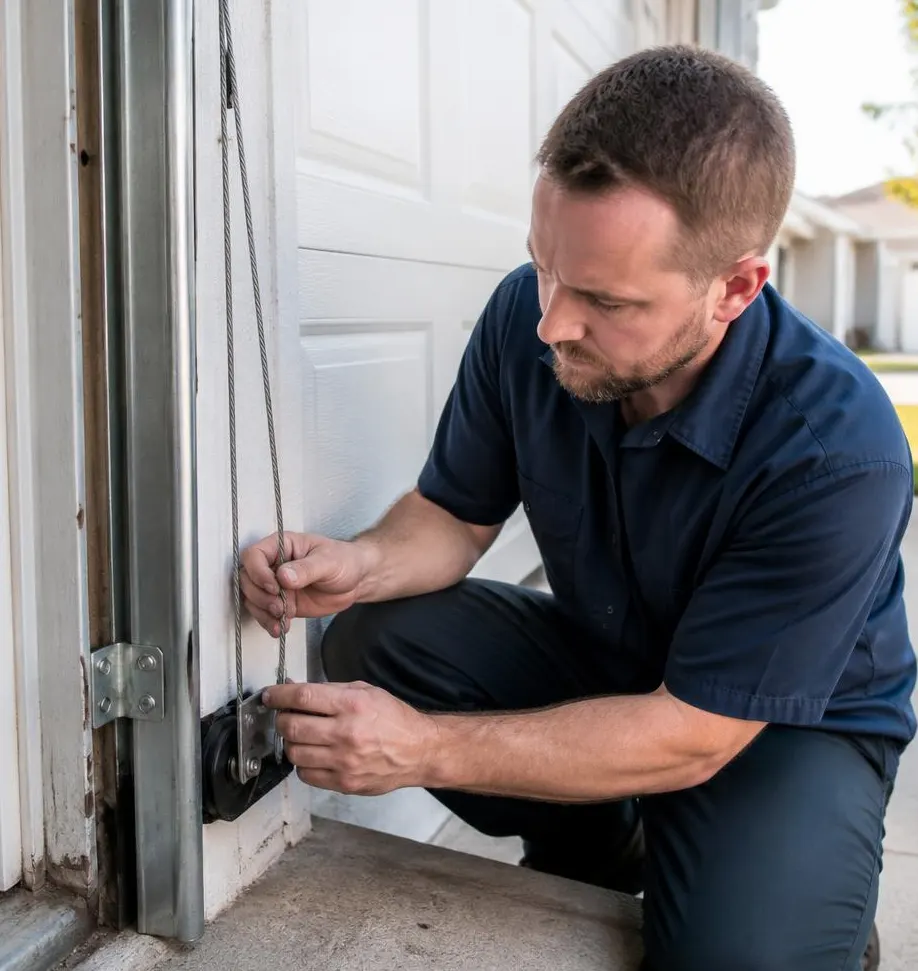
What a Skipped Garage Door Inspection Costs You
Garage doors rarely make a home inspection report beyond a line that says 'operates as intended.' That's a problem, because the door is the largest moving object in the house, and it's under spring tension strong enough to cause real injury if it fails. Skip a real inspection now, and you could be facing a stuck door during the first heavy winter rain, a snapped spring on a cold morning, or a full opener replacement within the first year of owning the home. None of that shows up on a standard disclosure. It shows up on your garage floor.
Why General Inspectors Skip It
Most home inspectors check that the door opens, closes, and reverses when something blocks the sensor beam. That's it. They're not trained to assess spring wear, cable fraying, or whether the opener's force settings are dangerously high. The door gets treated like a light switch: does it work right now, yes or no. It's up to you to look closer before you close.
Walk the Garage Yourself: The Checklist
- Spring type and visible wear. Look above the door for one or two torsion springs on a horizontal bar. Gaps between coils, visible rust, or a spring that looks stretched compared to its neighbor means it's near the end of its life. A failed spring means the door won't lift at all, or will drop suddenly if you force it open manually.
- Panel condition and rust spotting. Run a hand along the bottom two panels, especially on doors facing exposed, damp areas. Bubbling paint or rust specks at the seams signal moisture getting into the steel, which only gets worse through another winter rain season.
- Track alignment. Stand back and sight down both vertical tracks. They should be perfectly parallel. A track that's bowed or pulled away from the wall means the door has been forced at some point, or the house has settled. Either way, it's wearing the rollers unevenly.
- Weatherstripping and bottom seal. Check the rubber seal along the floor and the trim around the sides. Cracked or flattened seals let in dust, wildfire smoke during dry months, and rain during wet ones. A bad seal isn't dangerous, but it tells you the door hasn't been maintained.
- Opener age and force settings. Find the model and manufacture date on the opener unit. Anything over 10-12 years old is approaching replacement territory, and older units often lack modern safety reversal standards. Test the force setting by holding a 2x4 flat on the ground where the door closes; it should reverse immediately on contact, not push through.
- Photo-eye sensors. Look for the two small sensors a few inches off the floor on each track. They should be clean, aligned, and both lit solid (not blinking). Misaligned sensors are a common and cheap fix, but a seller who never noticed suggests the door hasn't been looked at in years.
- Manual balance test. With the opener disconnected (pull the red release cord), lift the door by hand to waist height and let go. It should stay in place. If it drops or shoots up, the springs are out of balance, which strains the opener motor and shortens its life.
- Seismic bracing at the header and jambs. In this region, older garage doors sometimes lack the reinforced bracing recommended for earthquake retrofits. Look for steel straps or reinforced framing at the top corners. Its absence isn't an emergency, but it's worth factoring into renovation plans.
- Signs of pest or moisture intrusion near vents. Dust buildup, nesting material, or water staining near any vent openings can mean gaps large enough for pests or blowing dust to get through during dry, smoky months.
Red Flags Worth Negotiating On
A door that fails the balance test, shows cable fraying, or has an opener older than a decade isn't a dealbreaker, but it's leverage. Spring replacement and opener upgrades are well-documented repair costs, and you can reasonably ask for a credit or have the work done before closing rather than inheriting a surprise.
When to Call Los Gatos Garage Door Co
If your walkthrough turns up worn springs, a misaligned track, or an opener that's clearly original to an older home, it's worth getting a second set of eyes before you move in. We handle spring replacement, garage door installation, and full garage door maintenance throughout Los Gatos, Saratoga, Scotts Valley, and the surrounding Santa Cruz Mountains, and we can tell you within minutes whether a door is safe to use as-is or needs work before winter rain sets in.
If you're closing on a home in Los Gatos, CA and want a real inspection of the garage door before move-in, give Los Gatos Garage Door Co a call. We'll walk the garage with you and tell you exactly what you're dealing with.